
Body Style Model Numbers and Their Purpose
 |
Most folks in the Model ‘A’ hobby are aware of Ford assigned model numbers to the various body styles, and are usually familiar with at least the number associated with the car or cars that they own. At first glance the various model numbers appear somewhat random. They are anything but random and indeed serve a purpose!
It’s all about the parts! Ford had a very well thought out parts numbering system. The body model numbers were a crucial part of that system.
If you’ve ever looked at a chassis parts price list you will find that the numbers for the chassis (running gear) alone range from approximately 1,000 through 19,000. These of course are broken down into major categorized sub-groups such as 1,000 through 1,999, 2,000 through 2,999, 3,000 through 3,999, etc.
Next was the “Standard Parts” category which was comprised of bolts, nuts, washers, wood screws, rivets, etc. These utilized numbers between 20,000-24,999 but was expanded beyond that number in later years.
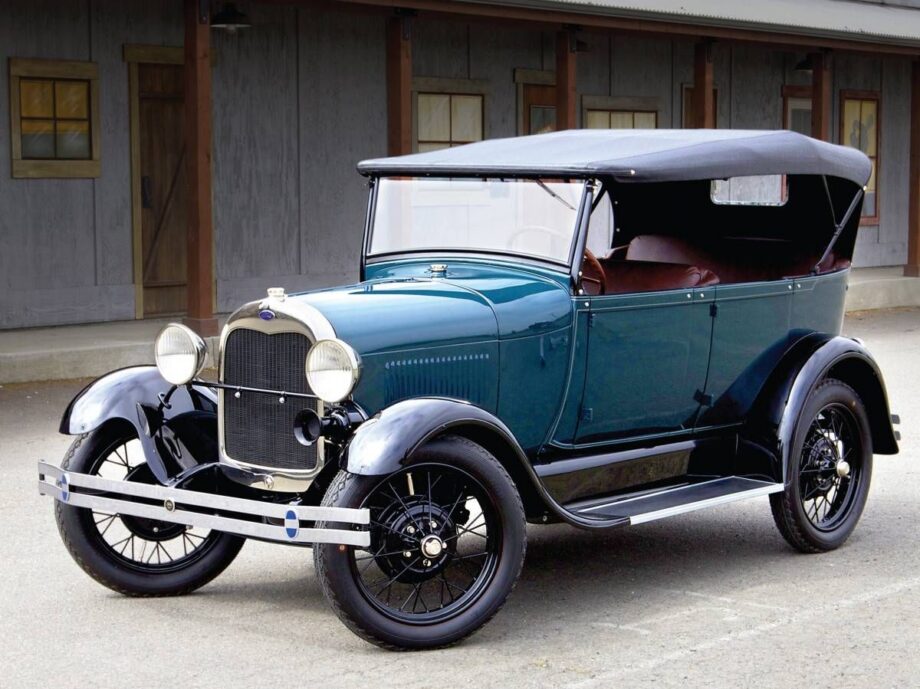
Ford clearly had some foresight here and left a bit of a gap before the first “body type” number. The first body type number was 35-A (and later the 35-B) which was the Phaeton. The Phaeton body (#35) was comprised of parts that spanned the numbers 35,000-39,000.
The next body type in the sequence was the Roadster at #40. The Roadster shared many parts with the Phaeton such as the cowl, doors, windshield, etc. Since those Phaeton parts retained Phaeton numbers throughout, the Roadster required somewhat fewer parts under the Roadster numbers for a complete body. The Roadster used numbers 40,000-43,900.
The last example includes the 45-A Coupe and 49-A Special Coupe. The 45-A used numbers (approximate} 45,000-48,500. The 49-A Special Coupe was an offshoot of the Coupe, requiring only a small percentage of new or different parts. These used numbers 49,050-49,107
Initially Ford numbered the commercial models after the passenger models. However as new, distinctly different passenger models were introduced (primarily from outside suppliers), the model numbers became sequentially intertwined.
Below is a complete list of bodies “by number”, including a couple that went through the entire development process but never went into production.
IMPORTANT NOTE ABOUT COMMERCIAL MODELS
With the exception of Panel Delivery type models (both “A” and “AA”), All commercial models required a minimum of Two bodies. The first being the Cab (Open or Closed), and the second being the “bed” or whatever was used at the rear. An example of a third “body” would be Stake Racks.
| 1928-31 FORD BODY TYPES | ||
| Passenger Bodies | ||
| Body Type | Body Name | Years |
| 35-A | Phaeton | 1928-29 |
| 35-B | Standard Phaeton | 1930-31 |
| 40-A | Roadster | 1928-29 |
| 40-B | Standard Roadster | 1930-31 |
| 40-B (De Luxe) | De Luxe Roadster | 1930-31 |
| 45-A | Coupe | 1928-29 |
| 45-B | Standard Coupe | 1930-31 |
| 45-B (De Luxe) | De Luxe Coupe | 1930-31 |
| 49-A | Special Coupe | 1928-29 |
| 50-A | Sport Coupe | 1928-29 |
| 50-B | Sport Coupe | 1930-31 |
| 54-A | Business Coupe | 1928-29 |
| 55-A | Tudor Sedan | 1928-29 |
| 55-B | Tudor Sedan | 1930-31 |
| 55-B (De Luxe) | De Luxe Tudor Sedan | 1931 |
| 60-A | Fordor (Leather Back—Seal Brown Top) Briggs | 1928-29 |
| 60-B | Fordor (Leather Back—Black Top) Briggs | 1929 |
| 60-C | Fordor (Steel Back) Briggs | 1929 |
| 68-A | Cabriolet | 1929 |
| 68-B | Cabriolet | 1930-31 |
| 68-C | Cabriolet | 1931 |
| 135-A | Taxi-Cab | 1928-29 |
| 140-A | Town Car | 1929 |
| 150-A | Station Wagon | 1929-30 |
| 150-B | Station Wagon | 1930-31 |
| 155-A | Town Sedan (Murray) | 1929 |
| 155-B | Town Sedan (Briggs) | 1929 |
| 155-C | Town Sedan (Murray) | 1930-31 |
| 155-D | Town Sedan (Briggs) | 1930-31 |
| 160-A | Standard Fordor Sedan | 1931 |
| 160-B | Town Sedan | 1931 |
| 160-C | De Luxe Fordor Sedan | 1931 |
| 165-A | Standard Fordor Sedan (Murray) | 1929 |
| 165-B | Standard Fordor Sedan (Briggs) | 1929 |
| 165-C | Standard Fordor Sedan (Murray) | 1930-31 |
| 165-D | Standard Fordor Sedan (Briggs) | 1930-31 |
| 170-A | Standard Fordor Sedan (2 Window) (Briggs) | 1929 |
| 170-B (Std.) | Standard Fordor Sedan (2 Window) (Briggs) | 1930 |
| 170-B (De Luxe) | De Luxe Fordor Sedan (2 Window) (Briggs) | 1930-31 |
| 180-A | De Luxe Phaeton (Briggs) | 1930-31 |
| 190-A | Victoria (Murray) | 1930-31 |
| 400-A | Convertible Sedan (Murray) | 1931 |
| Commercial Bodies | ||
| 65-A | Canopy and Screens (Used with Type 78-B) | 1931 |
| 66-A | De Luxe Pickup (box only) | 1931 |
| 72-A | “A” Bus (Never produced) | 1929 |
| 76-A | Open Cab | 1928-30 |
| 76-B | Open Cab | 1930-31 |
| 78-A | Pickup (box only) | 1928-31 |
| 78-B | Pickup (box only) | 1931 |
| 79-A | “A” Panel Delivery | 1928-30 |
| 79-B | “A” Panel Delivery | 1930-31 |
| 82-A | Closed Cab | 1928-30 |
| 82-B | Closed Cab | 1930-31 |
| 85-A | “AA” Panel Delivery | 1928-30 |
| 85-B | “AA” Panel Delivery | 1930-31 |
| 88-A | Platform | 1928-30 |
| 89-A | Express | 1928-30 |
| 90-A | “AA” Bus (Never produced) | 1929 |
| 130-A | De Luxe Delivery | 1928-30 |
| 130-B | De Luxe Delivery (Std.) | 1930-31 |
| 130-B | De Luxe Delivery (Drop floor) | 1930-31 |
| 185-A | Platform (157” wheelbase) | 1930 |
| 185-B | Platform (157″ wheelbase) | 1931 |
| 186-A | Stake (157″ wheelbase) | 1930 |
| 186-B | Stake (157″ wheelbase) | 1931 |
| 187-A | Platform (131-1/2” wheelbase) | 1931 |
| 188-A | Stake (131-1/2” wheelbase) | 1928-30 |
| 189-A | Stake (131-1/2” wheelbase) | 1931 |
| 195-A | Express Body (131-1/2” wheelbase) (box only) | 1931 |
| 196-A | Canopy Top and Screens (for 195-A) | 1931 |
| 197-A | Express Body (157″ wheelbase) (box only) | 1931 |
| 198-A | Canopy Top and Screens (for 197-A) | 1931 |
| 199-A | Ice Wagon | 1931 |
| 200-A | Hand hoist dump body assembly (Anthony) | 1930 |
| 200-B | Dump body with hand hoist (1/2 cu. yd. capacity) (Galion) | 1931 |
| 201-A | Coal body with heavy hydraulic hoist and end gate with chute (less swinging partition) (75 cu. ft.) (Galion) | 1930-31 |
| 201-B | Coal body with heavy duty hydraulic hoist, swinging partition and end gate with chute (high end) (75 cu. ft. or 120 cu. ft. with sides) (Wood) | 1930-31 |
| 201-C | Coal body with heavy duty hydraulic hoist and end gate with chute (less swinging partition) (75 cu. ft.) (Wood) | 1930-31 |
| 202-A | Gravity dump body assembly (Anthony) | 1930 |
| 202- B | Gravity dump body (1-1/2 cu. yd. capacity) (Wood) | 1931 |
| 203-A | Garbage body with heavy hydraulic hoist (2 cu. yd. capacity) (Galion) | 1930-31 |
| 203-B | Garbage body with heavy hydraulic hoist (2 cu. yd. capacity) (Wood) | 1930-31 |
| 203-C | Garbage body with heavy hydraulic hoist (3 cu. yd. capacity) (Galion) | 1930-31 |
| 203-D | Garbage body with heavy hydraulic hoist (3 cu. yd. capacity) (Wood) | 1930-31 |
| 204-A | Dump body with light hydraulic hoist (1-1/2 cu. yd. capacity) (Galion) | 1930-31 |
| 204-B | Dump body with light hydraulic hoist (1-1/2 cu. yd. capacity) (Wood) | 1930-31 |
| 205-A | Hi-Lift Hydraulic Coal Body (72 cu. ft.) (Wood) | 1930-31 |
| 206-A | Dump body with Rotary power hoist (Anthony) | 1930 |
| 206-B | Dump body with mechanical hoist (1-1/2 cu. yd. capacity) (Detwiler) | 1931 |
| 207-B | Combined dump and coal body with high sides and end gate with chute opening and swinging partition with heavy hydraulic hoist (1-1/2 cu. yd. capacity) (120 cu. ft. with top boards) | 1930-31 |
| 208-A | Dump body with heavy hydraulic hoist (1-1/2 cu. yd. capacity) (Galion) | 1930-31 |
| 208-B | Dump body with heavy hydraulic hoist (1-1/2 cu. yd. capacity) (Wood) | 1930-31 |
| 210-A | “AA” Panel Delivery | 1931 |
| 225-A | “A” Panel Delivery (with drop floor) | 1930-31 |
| 228-A | Stock Racks | 1931 |
| 229-A | Service Car | 1931 |
| 236-A | Light hydraulic hoist and body understructure (Galion) | 1930-31 |
| 236-B | Light hydraulic hoist and body understructure | 1931 |
| 237-A | Heavy hydraulic hoist and body understructure (Galion) | 1930-31 |
| 237-B | Heavy hydraulic hoist and body understructure (Wood) | 1931 |
| 238-A | Stock Racks (157” wheelbase) | 1931 |
| 239-A | Meat Packers Express | 1931 |
| 242-A | Heavy Duty Express Body (131-1/2” wheelbase) | 1931 |
| 244-A | Grain body with or without stock rack or grain side extensions (157″ wheelbase) | 1931 |
| 248-A | Grain body with or without stock rack or grain side extensions (131-1/2” wheelbase) | 1931 |
| 255-A | Special Delivery (Natural Wood) | 1931 |
| 270-A | Funeral Service | 1931 |
| 275-A | Funeral Coach | 1931 |
| 280-A | Ambulance Body (with side door) | 1931 |
| 285-A | Police Patrol (De Luxe) | 1931 |
| 290-A | Police Patrol (Standard) | 1931 |
| 295-A | Town Car Delivery | 1931 |
| 300-A | De Luxe Delivery | 1931 |
| 315-A | Standrive | 1931 |
| 330-A | School Bus and Passenger Bus | 1931 |
 Use the Back button on your browser or click on the arrow to return.